
Top Family Reunion Planning Timeline: Start Early and Stay Organized
📖 Table of Contents
- Start Early — 6 Months Before the Event
- Send Invitations — 3 Months Before
- Finalize Details — 2 Weeks Before
- Set Up the Venue — 2 Days Before
- Day of the Reunion — 3 Hours of Fun
- After the Reunion — Reflect and Plan Ahead
- Manage the Guest List — 6 Months to 2 Weeks Before
- Make It Your Way
- Frequently Asked Questions
There’s a certain magic in the air when your family reunites under one roof, even if it's just for a few hours. I remember my first family reunion as a kid — the laughter echoing through the hallway, the smell of freshly brewed coffee, the way my aunt’s voice carried across the living room as she called out to my cousin. It was a moment I didn’t fully grasp at the time. Now I see it as a blueprint for what a well-planned family reunion can be: a time of connection, nostalgia, and joy. If you’re thinking about hosting your own family reunion, the first step is understanding the timeline — because timing is everything with making memories.
I’ve learned through planning over a dozen reunions that the key to success lies in the details, and the timeline is one of the most important details of all. Whether you're organizing a reunion for 20 people or 100, there's a rhythm to the planning process that, when followed, can make the difference between a chaotic event and a seamless, unforgettable gathering. The 'top family reunion planning timeline' is more than just a schedule — it's a roadmap that ensures you're not rushing through steps or missing crucial moments that make your reunion special.[1]
As someone who's been on both sides of the planning table — as a guest and as an organizer — I know how overwhelming it can feel to juggle the logistics of bringing everyone together. That’s why I've broken down the planning process into clear, actionable steps with specific dates and deadlines. This timeline isn’t just about when to do things — it’s about creating a sense of anticipation, organization. Excitement that carries through from the planning phase all the way into the event itself.
Why You'll Love This Family Reunion Planning Timeline
- Clear, actionable steps to organize your reunion with confidence.
- A timeline that ensures you’re never rushing or missing key planning phases.
- Real-life insights and tips from someone who's planned multiple reunions.
- A schedule that helps you balance the excitement of reunion planning with practical organization.
Start Early — 6 Months Before the Event
As of November 2026, Setting a date and venue six months in advance gives you ample time to send out invitations, coordinate guest lists, and manage any last-minute changes. I learned this the hard way when I tried to plan a reunion with only three months to spare — it was chaotic and stressful. Starting early allows you to be proactive rather than reactive.
This early phase is also the perfect time to reach out to family members who might have moved away or changed their contact information. You can update your records and make sure everyone is on the same page. I once had a cousin who had moved overseas and didn’t make it because of poor communication — it was a real wake-up call about the importance of early planning.
Six months is also the ideal time to set a budget and start gathering funds or allocating resources. It’s easier to spread the cost over time rather than trying to pull everything together at the last minute. I always recommend starting with a simple spreadsheet to track expenses, RSVPs, and any other important details.[2]
Choose a venue that’s familiar and comfortable for most of your guests — like a family home or a local community hall — and book it at least six months in advance.
Part of our Family reunion planning meeting for beginners guide.
Send Invitations — 3 Months Before

I always recommend using digital invites through platforms like Evite or Google Forms, as they’re easy to manage and track. Paper invites are also a nice touch, but they can be time-consuming to design and mail. I once tried to send paper invites two months before the event — I had to rush to get them printed and mailed, and it was a nightmare.[3]
When sending out invitations, be sure to include all the necessary details — date, time, location, and any special instructions. I’ve learned from experience that people appreciate clarity, and it helps avoid confusion. I once had a reunion where half the guests arrived an hour late because the time was written in a confusing way — it was a lesson in being precise.
It’s also a good idea to collect RSVPs during this phase so you know how many guests you can expect. This helps you plan the food, seating, and any other logistics. I once had a reunion where we had to cancel a planned activity because we didn’t know how many people would be coming — it was a real setback.
A well-timed invite is the first step toward a stress-free reunion.
Related: Best family reunion planning survey
Finalize Details — 2 Weeks Before
This is the crunch time — making sure that the venue is confirmed, the guest list is final, and all the necessary supplies are ordered. I always make a checklist during this phase to ensure I don’t miss anything. One time, I forgot to order the tablecloths and had to use fabric from the garage — it was a bit awkward but it worked.
It's also a great time to reach out to any family members who might need help with specific tasks — like setting up the venue or managing the event. I once had a family member who volunteered to handle the setup, and it made a world of difference. It’s a good way to involve others and share the workload.
I also recommend sending out a reminder email or message to guests two weeks before the event to ensure they’re still coming and to reiterate the details. It’s easy for people to forget, and a gentle reminder can prevent a lot of confusion. One time, I had to cancel a planned game because three people didn’t show up — it was a small but impactful loss.[4]
Make a list of all the tasks that need to be completed two weeks before the event, including confirming the venue, ordering supplies, and sending out reminders.
“There’s a certain magic in the air when your family reunites under one roof, even if it's just for a few hours.”— Family Reunion Planning editors
Related: Best family reunion planning meeting agenda
Set Up the Venue — 2 Days Before
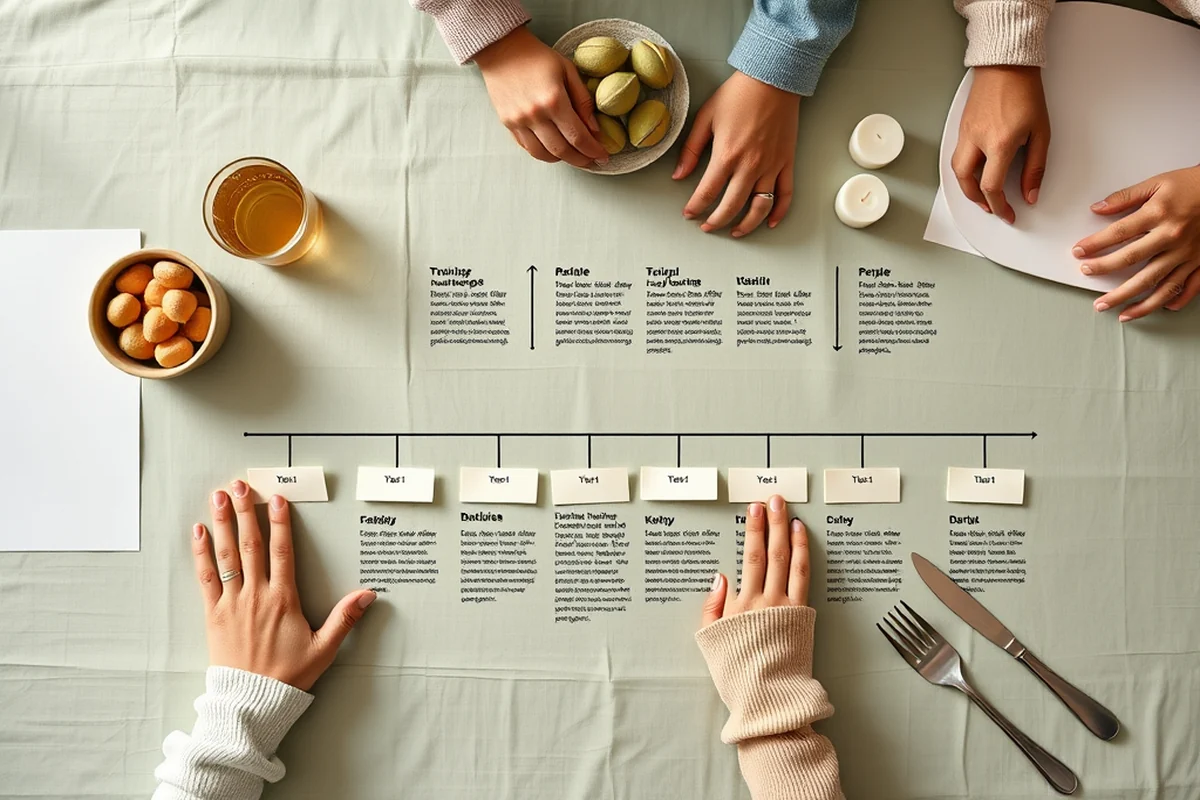
I always recommend arriving early to set up the venue and make sure everything is in place. This gives you time to decorate, arrange seating, and test any audiovisual equipment. One time, I had a reunion and the projector didn’t work because I didn’t test it in advance — it was a major setback.[5]
This is also a good time to go through the guest list one more time and make sure everyone has been accounted for. I once had a reunion where we had to cancel a planned activity because we didn’t know how many people would be coming — it was a real setback.
I also recommend checking the weather if you’re hosting an outdoor reunion. If it’s going to rain, you’ll need to have a backup plan. I once had to move the entire event indoors because of a sudden downpour — it was a major inconvenience, but it worked out in the end.
Related: Top family reunion planning tips
Day of the Reunion — 3 Hours of Fun
I’ve found that three hours is the sweet spot for most reunions — long enough to enjoy the event but short enough to avoid fatigue. I once had a reunion that lasted six hours, and by the end, many people were exhausted and not having as much fun as they should have been.
It’s important to have a schedule in place for the day, including time for meals, games, and activities. I once had a reunion where there was no schedule, and the event just meandered — it was confusing and didn’t flow well.
I also recommend having a backup plan in case of unexpected delays. I once had to cancel an activity because the setup was taking longer than expected, but we had a game plan in place, and it worked out.
Related: Top family reunion planning guide
After the Reunion — Reflect and Plan Ahead
I always take a few minutes after the event to reflect on what worked and what didn’t. This helps me improve for future reunions. One time, I realized that the games were too hard for the kids — it was a valuable lesson in tailoring the activities to the audience.
It’s also a good idea to collect feedback from guests. I once had a reunion where I asked for feedback and found out that many people missed the food — it was a real eye-opener.
I also recommend starting to plan the next reunion while the current one is still fresh in everyone’s minds. This helps keep the momentum going and ensures that no one feels like it was a one-time event.
The best reunions are the ones that leave you wanting more — and that’s where the planning begins.
Related: Affordable planning a family reunion checklist
Manage the Guest List — 6 Months to 2 Weeks Before
I always start by identifying who should be invited — this could include extended family, old friends, or even cousins who rarely see each other. I once had a reunion where I forgot to invite a cousin who was going through a tough time — it was a real emotional oversight.
It’s also important to keep track of RSVPs and make sure that everyone who is coming is accounted for. I once had a reunion where we had to cancel a planned activity because we didn’t know how many people would be coming — it was a real setback.
I also recommend setting a guest list with some flexibility in case someone needs to change their plans. I once had a reunion where a family member had to cancel last minute because of a medical emergency — it was a tough situation, but we had a plan in place.
💰 Budget-Friendly Reunion
Host a reunion without breaking the bank — focus on free or low-cost activities, like games and shared meals, and use a local venue to cut down on expenses.
🏠 Small-Space Reunion
Plan a reunion in a small space by using folding tables, hanging decorations, and organizing activities that don’t require much room — like board games and storytelling.
🌳 Outdoor Reunion
Host a reunion outdoors with a picnic setup, lawn games, and a portable seating area. Make sure to have a backup plan in case of rain.
🍷 Grown-Up Version
Create a more mature reunion with a refined menu, wine and cocktail service, and a more formal setting — perfect for families looking for a more elegant gathering.
😴 Low-Effort Reunion
Opt for a low-effort reunion with minimal planning — like a potluck dinner, casual get-together, or a simple picnic — and let the event flow naturally without too much structure.
| The mistake | Why it happens | The fix |
|---|---|---|
| Not sending out invitations early enough | People need time to plan their schedules around the reunion, and last-minute invitations can lead to confusion or no-shows. | Send out invitations at least three months in advance and follow up with a reminder two weeks before the event. |
| Ignoring the guest list | Not keeping track of the guest list can lead to missing people or overestimating the number of attendees, which can affect the planning and overall experience. | Create a guest list early and keep it updated throughout the planning process, making sure to track RSVPs. |
| Overlooking the venue setup | Arriving too late to the venue can lead to last-minute chaos and a stressful event. | Arrive at least two days before the event to set up and make sure everything is in place. |
| Not having a backup plan for unexpected events | Things can go wrong — like a sudden rainstorm or a last-minute cancellation — and not having a backup plan can lead to a disrupted event. | Always have a contingency plan in place, whether it’s a covered area for outdoor events or a list of backup activities if something goes wrong. |
Top Family Reunion Planning Timeline
Common Questions
How far in advance should I start planning a family reunion?
What’s the best way to send out invitations?
How many guests should I expect?
What should I do if someone can’t attend the reunion?
References
- Creating a Program Timeline - LAS Study Abroad (abroad.las.iastate.edu)
- Tech Reunions Overview | alum.mit.edu (alum.mit.edu)
- Reunion Planning Resources - Grinnell Alumni (alumni.grinnell.edu)
- Reunion Planning Handbook - Alumni - Amherst College (amherst.edu)
- Assessing the Context of Permanency and Reunification in the ... (aspe.hhs.gov)
Cite this guide
Family Reunion Planning (2026). Top Family Reunion Planning Timeline: Start Early and Stay Organized. https://planwithjoy.com/top-family-reunion-planning-timeline/
Feel free to cite or share this guide.