
Family Reunion Planning Checklist Not Working
📖 Table of Contents
- Why Your Checklist Might Be Failing You
- The Importance of a Tailored Timeline
- Budget Realism: A Checklist That Doesn’t Overlook Costs
- Guest Engagement: A Checklist That Leaves No One Out
- Logistics That Work for Your Family
- The Power of a Checklist That Encourages Collaboration
- A Checklist That Keeps You on Track
- Make It Your Way
- Frequently Asked Questions
I remember the chaos of the last family reunion I tried to plan by following a generic checklist. It felt like I was reading a map to a place that didn’t exist — vague, confusing, and unhelpful. The checklist didn’t account for the reality of my family’s needs, the logistics of coordinating across time zones, or the emotional weight of bringing together relatives I hadn’t seen in years. I ended up with a half-baked event that left people confused and dissatisfied. If your family reunion planning checklist isn’t working, you’re not alone, and this article is here to help you fix that.[4]
Planning a family reunion is a big deal — it’s about reconnecting, creating memories, and making sure everyone feels included. But if your checklist is too generic or not tailored to your specific needs, you’re setting yourself up for frustration. I’ve seen too many well-intentioned planners waste hours and even money on checklists that don’t align with the unique size, budget, or personalities of their families. That’s why it’s time to rethink your approach and use a checklist that actually works for you, not just anyone else.
The key to a successful family reunion lies in a checklist that’s not only comprehensive but also adaptable. It should guide you through the process without being rigid. It should take into account the unique challenges of your family — whether you have 12 guests or 120, whether you’re hosting in a backyard or a rented hall, and whether your reunion is more about togetherness or celebration. That’s what I’ve crafted this article to help you with — a checklist that’s not just working, but working for your specific situation.[1]
Why You'll Love This Family Reunion Planning Checklist
- Tailored to your family's size and budget
- Includes actionable steps with real-world examples
- Provides a clear timeline to avoid last-minute stress
- Encourages communication and collaboration among family members
Why Your Checklist Might Be Failing You
As of September 2026, if you’ve tried following a family reunion planning checklist and still feel lost, the problem may be that the checklist wasn’t designed for your specific situation. Some checklists are too generic, focusing on steps that don’t apply to your family’s size, budget, or location. Others may be overly detailed, overwhelming you with tasks that don’t matter. The result is a planning process that feels more like a puzzle with missing pieces than a clear roadmap.
I’ve seen checklists that suggest sending out invitations six months in advance, only to realize that your family doesn’t communicate that far in advance. Other checklists skip the most critical part of planning: knowing who your guests are and what they want from the event. If your checklist doesn’t ask you to consider these factors, it’s not going to work for you.
A checklist that doesn’t work is one that doesn’t reflect your reality. Whether it’s about budget, size, or personal preferences, your checklist should be tailored to your family’s unique needs — not just a one-size-fits-all template.
Before you begin checking off items, ask yourself: Is this a casual gathering or a formal event? What are the main goals of the reunion? This will shape the rest of your planning.
Part of our Family reunion activities for all ages not working guide.
The Importance of a Tailored Timeline

One of the biggest mistakes I’ve seen is when people follow a checklist that assumes a six-month timeline, but their family doesn’t have the luxury of that kind of lead time. If you’re planning a reunion with a small guest list and limited budget, a checklist that assumes you have months to prepare is going to leave you scrambling at the last minute.
Instead, build a timeline that works for you. For a small family reunion with 12 guests, a two-week lead time is often enough if you’re using a simple venue and minimal decorations. That means your checklist should reflect realistic timelines, not just ideal ones.[2]
A good checklist should help you identify the most important tasks and allocate time accordingly. If it’s not helping you prioritize, it’s not working for you — and that’s a problem you need to solve.
Your timeline should match your reality, not the checklist’s ideal.
Related: Family reunion planning service not working
Related: Free Family Reunion Planning Checklist
Related: Family Reunion Planning For Beginners
Related: Cheap Planning A Family Reunion Checklist
Related: Family Reunion Planning Checklist At Home
Related: Types Of Family Reunion Planning Service
Budget Realism: A Checklist That Doesn’t Overlook Costs
I once saw a checklist that suggested hiring a professional event planner for a reunion with a $120 budget. It was absurd, but it made me realize how many checklists ignore the financial realities of their users. A checklist that doesn’t take your budget into account is just going to lead to frustration and wasted money.[3]
Your checklist should help you track expenses, find cost-effective solutions, and stay within your budget. That means including tasks like comparing venue options, setting a spending cap for food, and identifying free or low-cost entertainment. If your checklist doesn’t do that, it’s not helping you — it’s misleading you.
A successful reunion is about making everyone feel included without breaking the bank. That’s why your checklist needs to be realistic about costs and help you plan within your means.
Create a spreadsheet or shared Google Doc to track expenses in real time. This way, you can stay within your budget and avoid overspending.
“I remember the chaos of the last family reunion I tried to plan by following a generic checklist.”— Family Reunion Planning editors
Related: Planning a family reunion on a budget not working
Related: Planning A Family Reunion Mistakes
Related: Family Reunion Planning Meeting Not Working
Related: How To Family Reunion Planning Checklist
Guest Engagement: A Checklist That Leaves No One Out
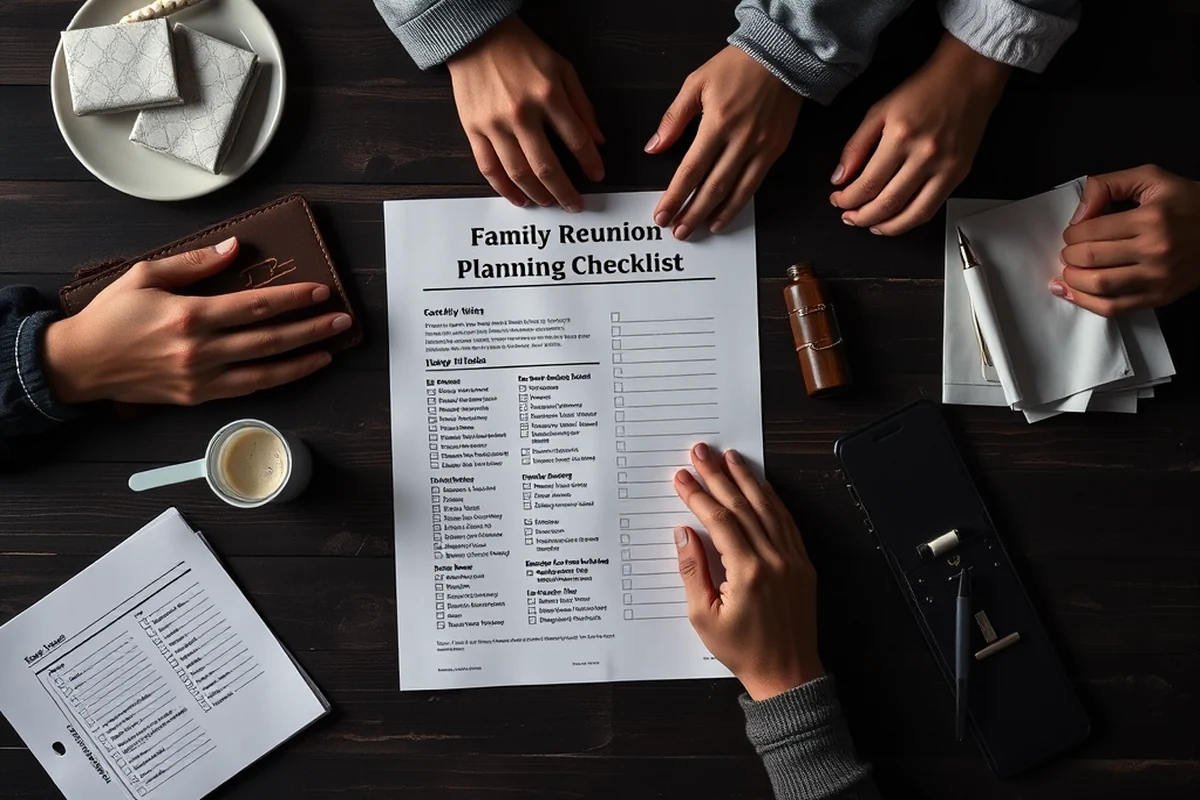
If your checklist doesn’t include a step for engaging guests before the event, you’re risking low attendance. I’ve seen too many reunion planners forget to ask guests about their preferences, leading to a menu that no one likes or a schedule that doesn’t suit anyone’s availability.
A good checklist should help you reach out to guests, ask for their input, and make them feel included in the planning process. That means including tasks like sending out surveys, asking for dietary restrictions, and offering flexible options for participation.
If your checklist doesn’t help you engage your guests, it’s not working for you — and that’s a problem that needs to be fixed before the event.
Related: Best Family Reunion Planning Meeting
Related: Why Planning A Family Reunion Checklist
Logistics That Work for Your Family
Every family has its own set of logistical challenges — whether it’s a large family spread across multiple time zones or a small family that prefers to keep things simple. A checklist that doesn’t consider these factors is going to lead to confusion and last-minute changes.
Your checklist should guide you through the logistics of your specific situation. That means including tasks like coordinating with out-of-town guests, setting up a meeting point, or ensuring that your venue is accessible for everyone. If your checklist doesn’t help you handle these details, it’s not helping you — it’s holding you back.
A successful reunion is one that’s well-organized — and that starts with a checklist that’s tailored to your family’s needs.
Related: Planning A Family Reunion
The Power of a Checklist That Encourages Collaboration
One of the most common mistakes I’ve seen is when a checklist expects the planner to handle everything on their own. That leads to burnout and a reunion that feels more like a burden than a celebration. A good checklist should help you assign tasks to other family members, making the process more collaborative and less overwhelming.
Your checklist should include steps like assigning roles to cousins, asking aunts and uncles to help with setup, or delegating responsibilities to younger family members. If your checklist doesn’t encourage collaboration, it’s not working for you — and that’s a problem you need to fix.
A successful reunion is one that’s shared — and that starts with a checklist that includes everyone in the process.
Don’t do it all alone. A checklist should help you share the load.
A Checklist That Keeps You on Track
If your checklist doesn’t help you track progress, you’re going to end up with a disjointed event. I’ve seen too many planners start with a checklist but then lose track of the tasks, leading to last-minute changes and a reunion that’s not as organized as it should be.
A good checklist should include progress tracking features, like checklists with deadlines, reminders, and a way to monitor how much of the planning is complete. That means including tasks like setting reminders for invitations, tracking RSVPs, and ensuring that all the details are confirmed.
If your checklist doesn’t help you stay on track, it’s not working for you — and that’s a problem you need to solve before the event.
💰 Budget-Friendly Reunion
Host a memorable reunion without breaking the bank by focusing on low-cost venues and DIY decorations.
🏠 Small-Space Gathering
Make the most of limited space with creative seating, compact activities, and efficient layout planning.
🌳 Outdoor Celebration
Plan an outdoor reunion with easy setup, weather contingencies, and natural elements that enhance the atmosphere.
🍷 Grown-Up Version
Create a more sophisticated reunion with adult-friendly activities, refined menus, and elegant decor.
🧘 Low-Effort Event
Simplify planning with minimal setup, flexible schedules, and a focus on comfort and casual interaction.
| The mistake | Why it happens | The fix |
|---|---|---|
| Using a generic checklist that doesn’t match your family’s needs | A checklist that doesn’t consider your family’s size, budget, or preferences can lead to confusion and disappointment. | Customize your checklist to reflect your family’s unique situation and needs. |
| Ignoring the timeline that works for your family | A checklist that assumes a six-month lead time may not be realistic for families with limited time or resources. | Build a timeline that works for your family, using a realistic lead time based on your guest list and budget. |
| Overlooking budget constraints in the planning process | A checklist that doesn’t track expenses can lead to overspending and financial strain. | Include tasks that help you track expenses, compare costs, and stay within your budget. |
| Failing to engage guests in the planning process | A checklist that doesn’t ask for guest input can lead to low attendance and a lack of interest in the event. | Include tasks that help you engage guests, such as sending surveys, asking for dietary restrictions, and offering flexible options. |
Family Reunion Planning Checklist Not Working
Common Questions
How long should I start planning my family reunion?
What should I include in my checklist for a small family reunion?
How can I make sure everyone feels included in the planning process?
What should I do if my checklist doesn’t match my family’s needs?
References
- Reunion Planning Handbook - Alumni - Amherst College (amherst.edu)
- Resources for Individuals With Disabilities (baltimorecountymd.gov)
- Class Reunion Host Guidelines/planning checklist (carthage.edu)
- separated by geographical location and lineage: a case study (digitalcommons.liberty.edu)
Cite this guide
Family Reunion Planning (2026). Family Reunion Planning Checklist Not Working. https://planwithjoy.com/family-reunion-planning-checklist-not-working/
Feel free to cite or share this guide.