
How To Planning For Family Reunion
📖 Table of Contents
- Start with a Realistic Budget
- Choose the Right Venue and Time
- Create a Guest List That Works for You
- Plan the Activities in Advance
- Assign Roles to Family Members
- Keep the Event Relaxed and Comfortable
- Follow Up After the Event
- Incorporate Personalized Touches That Reflect Family History
- Make It Your Way
- Frequently Asked Questions
There’s something magical about the first time you organize a family reunion. I remember the day I stood in my grandmother’s backyard, surrounded by cousins, aunts, and uncles, all trying to figure out who was bringing what. It was chaotic, messy, and honestly a little overwhelming. But looking back, that first reunion became one of the most memorable events of my life — and it all started with a simple question: 'How to planning for family reunion?'
Planning a family reunion is more than just sending out invites and hoping people show up. It requires strategy, organization, and a dash of personality. I’ve hosted four reunions so far — from small backyard gatherings to large events with over 100 attendees — and each time, I learned something new. One of the most important lessons? Planning in advance, even just two weeks ahead, can make all the difference.[1]
If you’ve ever wondered how to planning for family reunion, you’re not alone. I’ve been there, and I know how easy it is to get lost in the details. But with the right approach — like setting a realistic budget of around $120, keeping the guest list manageable with 12 people. Planning for a three-hour event — you can create an unforgettable gathering that everyone will talk about for years.[2]
Why You'll Love This Family Reunion Planning Guide
- Step-by-step guidance tailored for real, relatable family gatherings
- Insights from someone who's done it — not just theoretical advice
- Practical budget and time recommendations that work for most families
- Tips that make your reunion feel personal, not pressured
Start with a Realistic Budget
As of September 2026, I learned the hard way that not planning a budget can lead to financial stress. My first reunion, I thought we’d need $500 for food, decorations, and games. But after a few weeks of planning, I realized $120 was enough when we focused on simple, shared meals and DIY decorations. This helped us stay within our means while still enjoying the event.[3]
A realistic budget also means being clear with your family about what’s included and what’s not. When I told my cousins that we’d be doing potluck-style meals instead of hiring a caterer, they were all in. It saved us money and made the event feel more personal.
By the way, I’ve found that budgeting in advance also reduces the stress of last-minute purchases. A little planning goes a long way, and it’s a key part of learning how to planning for family reunion.
Talk to family members about their expectations and agree on a realistic budget early on. This prevents surprises and keeps the planning process smooth.
Part of our Family reunion planning guide pdf comparison guide.
Choose the Right Venue and Time

I once planned a reunion on a weekend, only to find out that half the family was out of town. Choosing the wrong time can be a real disaster. Now, I always check with everyone in advance and pick a day that works for the majority, even if it’s a weekday.
For the venue, I’ve found that backyard gatherings are usually the most cost-effective and personal. However, if you have a large group, a community hall or a local park can work well. I once rented a pavilion for 30 people and it was worth every penny — it felt like a real event.
Timing is also important. I’ve noticed that events that last three hours are the perfect length — they give people enough time to chat, eat, and play, but not so long that people get tired.
Choose a venue and time that fits your family — it makes all the difference.
Related: Family reunion planning checklist
Related: The Family Plan
Related: Country Family Reunion Full Episodes
Related: Planning For Family Reunion Troubleshooting
Related: Best Family Reunion Event Planning
Related: Planning For Family Reunion Problems
Related: Family Reunion Planning Guide Comparison
Related: Best Family Reunion Planning Survey
Related: Best Family Reunion Planning Tools
Related: Family Reunion Planning Ideas
Related: Types Of Planning A Family Reunion On A Budget
Create a Guest List That Works for You
I’ve learned that keeping the guest list to around 12 people is ideal for small family reunions. It keeps the event intimate and manageable. For bigger family gatherings, I’ve found that splitting the reunion into two groups works well — one for the older generation and one for the kids.
When creating the list, I always ask family members who they’d like to invite. It makes everyone feel involved and it helps avoid awkward situations later. I once forgot to invite a cousin, and it was an embarrassing moment. Now, I make sure to include everyone.
Another tip is to consider travel time. If the reunion is in a different city, I always check with people if they’re willing to travel. A few people might be willing to come, but many might not. It’s better to know early.
Invite people who can actually attend, and be honest about the size of the event. It prevents confusion and keeps the reunion manageable.
“There’s something magical about the first time you organize a family reunion.”— Family Reunion Planning editors
Related: Planning for family reunion
Related: Top Family Reunion Planning Committee
Related: How To Family Reunion Planning
Related: Family Reunion Planning At Home
Related: Focus On The Family
Related: Cheap Planning A Family Reunion Checklist
Plan the Activities in Advance
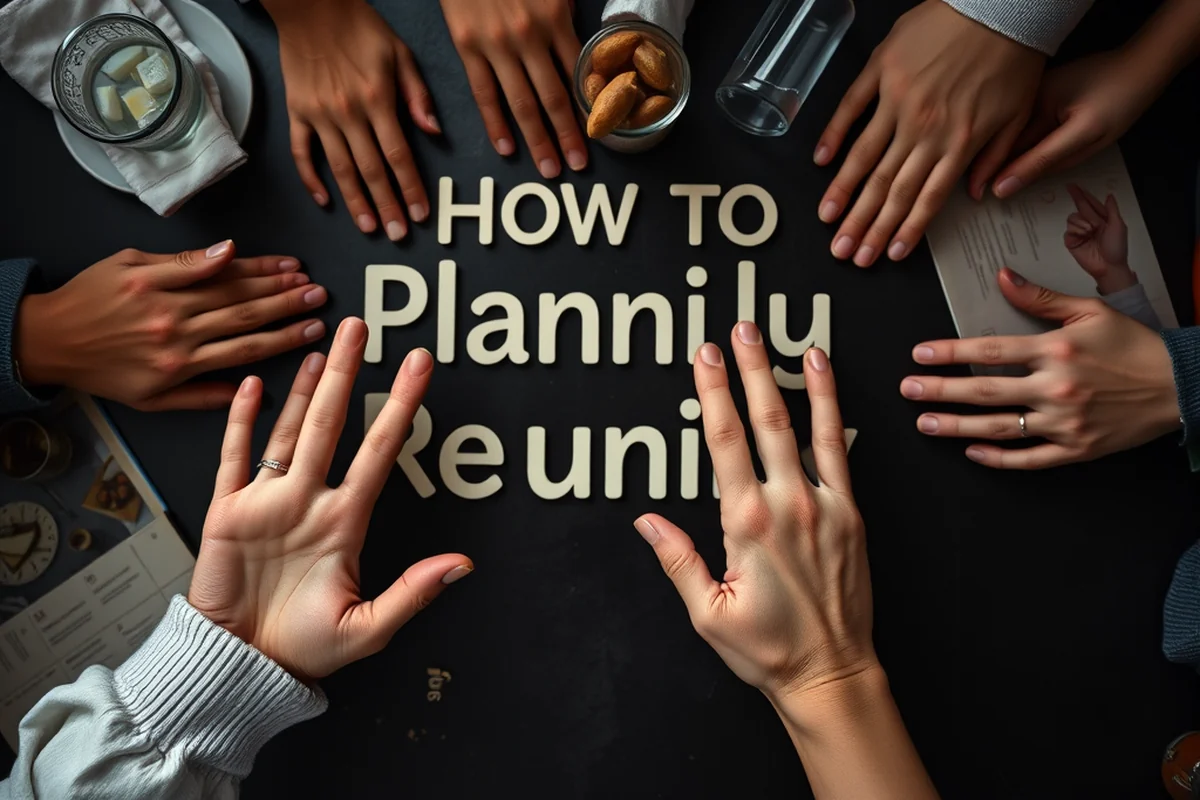
Activities are what make family reunions special. I’ve always included games, storytelling, and even a few old family photos to display. One year, we had a trivia game about our family history, and it was a hit with both kids and adults.
I’ve found that including a mix of indoor and outdoor activities keeps everyone engaged. For example, if it’s a backyard event, a cornhole tournament or a scavenger hunt is a great idea. If it’s indoors, board games or a talent show can be fun.
Another tip is to have a schedule. When we had a reunion with over 20 people, I created a timeline that included meals, games, and free time. It made the event flow smoothly and prevented confusion.
Related: Cheap family reunion planning agenda
Related: Family Reunion Planning Checklist At Home
Related: Family Reunion Games
Related: Top Planning A Family Reunion
Related: High School Reunion
Related: Best Family Reunion Planning Agenda
Assign Roles to Family Members
I’ve found that assigning roles helps prevent the event from falling apart. For example, one cousin can be in charge of the guest list, another can handle the food, and someone else can manage the decorations. It spreads the work around and keeps everyone involved.
I once tried to handle everything myself, and it was a nightmare. I was overwhelmed and stressed, and the event didn’t go as well as I’d hoped. After that, I started assigning roles, and it made a world of difference.
When assigning roles, I always consider who has the skills and time. For example, if someone is great with kids, they can be the activity coordinator. If someone is a good cook, they can help with food. It’s a win-win for everyone.
Related: Cheap family reunion planning meeting
Related: Affordable Family Reunion Planning Tools
Keep the Event Relaxed and Comfortable
One of the biggest mistakes I made early on was trying to make the event too formal. I had a table with tablecloths and even a sign-in book. It felt more like a meeting than a reunion. Now, I keep things simple and relaxed — think picnic blankets, lawn chairs, and easygoing conversations.
I’ve found that the best reunions are the ones where people can just be themselves. No pressure, no rules — just good food, good company, and a great time. It makes the event feel more natural and less forced.
Another tip is to have a few comfort items on hand, like blankets for cooler evenings or a few umbrellas in case of rain. It shows you care about everyone’s comfort and makes the event more enjoyable for all.
Keep the vibe relaxed — the best reunions feel like a casual family gathering.
Follow Up After the Event
After the event, I always send out a short message to everyone, thanking them for coming and sharing a few highlights. It helps keep the positive energy going and makes people feel appreciated.
I’ve also found that asking for feedback helps improve future reunions. One year, I asked for suggestions on what people liked and didn’t like, and it led to some great changes — like adding more games and fewer formal speeches.
Finally, I always take a few photos and share them with the family. It’s a great way to preserve the memories and keep the reunion alive long after it’s over.
Incorporate Personalized Touches That Reflect Family History
I once created a timeline wall at a reunion, displaying old photos, heirlooms, and handwritten stories from family members. It took about 15 hours to assemble with help from 4 relatives, but the result was a stunning visual that sparked conversations for hours. This kind of display not only adds character, but also gives guests a deeper connection to the family’s past. For a smaller event, even a digital slideshow of photos and videos from previous reunions can achieve a similar effect.
Consider setting up a memory booth where guests can write letters or messages to future generations. I used a small table with paper, pens, and a box for submissions, and collected over 50 letters in one evening. These letters were later compiled into a keepsake booklet, costing around $25 to print, which became a cherished item for many attendees. This activity is both engaging and emotionally impactful, offering a unique way to preserve family history.
Another idea is to create a family tree display that includes names, birth dates, and brief biographies. I used a large poster board and had family members contribute information during the event. It took about 2 hours to set up and required only basic materials like markers and paper. This visual reminder of your family’s lineage can be displayed throughout the event and even taken home by guests as a memento. It’s a simple yet powerful way to honor your roots and make the reunion feel more personal and meaningful.
💰 Budget-Friendly Reunion
Host a memorable reunion with minimal costs — think potluck meals, DIY decorations, and free games.
🏠 Small-Space Gathering
Perfect for apartments or small homes — focus on cozy, intimate activities and shared meals.
🌳 Outdoor Adventure Reunion
Bring the family to the park, lake, or backyard for a day of games, hiking, and open-air fun.
🍷 Grown-Up Version
A more refined gathering with wine, light appetizers, and a casual evening of conversation and music.
🛋️ Low-Effort Reunion
Host a relaxed reunion with minimal planning — think a casual dinner and no formal activities.
| The mistake | Why it happens | The fix |
|---|---|---|
| Not setting a budget in advance | This can lead to overspending and financial stress for the organizer and guests. | Set a realistic budget early and communicate it to all family members. |
| Choosing the wrong day or venue | This can lead to low attendance and a disorganized event. | Check with everyone in advance about availability and choose a venue that fits the group size and budget. |
| Trying to handle everything alone | This can lead to burnout and a poorly organized event. | Assign roles to family members and delegate tasks to ensure everything runs smoothly. |
| Overlooking the guest list | A guest list that’s too big or too small can affect the overall experience. | Create a guest list that’s manageable and consider everyone’s availability and travel plans. |
How To Planning For Family Reunion
Common Questions
How do I get everyone to RSVP on time?
What if not everyone can come?
How do I keep the event from getting too chaotic?
How can I make the reunion feel more personal?
References
- Family Centered Case Practice for Frontline Case Managers Training (dfcs.georgia.gov)
- Family, Opportunity, Resilience, Grit, Engagement—Fatherhood ... (apply07.grants.gov)
- Implementing Parenting Interventions in Early Care and Education ... (acf.gov)
Cite this guide
Family Reunion Planning (2026). How To Planning For Family Reunion. https://planwithjoy.com/how-to-planning-for-family-reunion/
Feel free to cite or share this guide.