
Family Reunion Planning Meeting Agenda Comparison: What Works Best
📖 Table of Contents
- Why a Meeting Agenda Matters in Family Reunion Planning
- Comparing Agenda Formats: What Works Best for Your Family?
- Including All Family Members in the Agenda: Why It Matters
- Setting Clear Goals for the Meeting
- Assigning Roles: Who Does What?
- Creating a Shared Document for the Agenda
- Following Up After the Meeting
- Make It Your Way
- Frequently Asked Questions
I remember the first family reunion I helped plan — my aunt had handed me a crumpled list of names and a vague directive to 'get everything organized.' There were no agendas, no timelines. No clear roles. The event was a chaotic blur of misplaced RSVPs, confused timelines, and last-minute decisions that left everyone exhausted. That’s when I realized that a well-structured family reunion planning meeting agenda is the cornerstone of a successful event. It’s not just about scheduling; it’s about clarity, collaboration, and creating a shared vision that every family member can rally around.[3]
A family reunion planning meeting agenda comparison is more than a checklist — it’s a roadmap that ensures no detail is overlooked, from budgeting to assigning roles. I’ve tested dozens of formats over the years, and the one that always works best includes time blocks, clear action items, and a shared responsibility model. Whether you’re planning for 10 people or 100, having a structured agenda comparison gives you the control and confidence needed to turn a jumble of ideas into a cohesive, stress-free event.[1]
The key to a great family reunion isn’t just about food or fun activities — it’s about the people, their needs, and the shared experience. A family reunion planning meeting agenda comparison ensures that every voice is heard, every concern addressed, and every decision made with purpose. I’ve seen the difference it makes when a meeting has a clear structure. It transforms chaos into cooperation and confusion into clarity. That’s why I want to share my insights on how to compare and craft the perfect agenda for your next family reunion.[4]
Why You'll Love This Family Reunion Planning Meeting Agenda Comparison
- Clarity on responsibilities and timelines prevents confusion and last-minute scrambles.
- A structured agenda ensures that all family members feel heard and involved in the planning process.
- It helps avoid budget overruns and miscommunication by creating shared goals and expectations.
- A well-organized meeting leads to a more cohesive and enjoyable event for everyone involved.
Why a Meeting Agenda Matters in Family Reunion Planning
As of November 2026, when I first started planning family reunions, I underestimated the importance of a structured meeting agenda. I thought it was enough to just gather everyone in a room and hope for the best. That approach led to confusion, missed deadlines, and a disorganized event. Once I introduced a structured agenda, everything changed — we had clear topics, time limits, and assigned roles.[5]
A good agenda prevents the meeting from going off track. It ensures that everyone has a chance to speak, and that important tasks like setting the budget, choosing a venue, or assigning roles are not overlooked. This level of organization gives the planning team a clear sense of direction and makes it easier to follow through on decisions made during the meeting.
I’ve seen it time and again — when a family reunion planning meeting has a clear agenda, the outcome is a more cohesive, well-executed event. It’s a small step that makes a huge difference in the overall success of the reunion.
Assigning a specific time limit to each agenda item keeps the meeting focused and prevents one topic from taking over the entire meeting. I use a kitchen timer to keep things on track and ensure that everyone’s time is respected.
Part of our Family reunion planning agenda for beginners guide.
Comparing Agenda Formats: What Works Best for Your Family?

I’ve tested several agenda formats over the years, and the one that works best for most families is a detailed, time-blocked agenda that includes clear topics, discussion points, and assigned roles. It’s not just about the order of items — it’s about how well each one is structured and how much time is allocated for discussion.
Another effective approach is a ‘checklist-style’ agenda that lists key tasks without specifying time limits. This can be useful for smaller groups or families that prefer a more flexible approach. However, I’ve found that it’s more likely to lead to missed deadlines or unfinished tasks if not carefully monitored.
I recommend starting with a time-blocked agenda and adjusting it based on the size of the group and the complexity of the tasks. It’s a balance between structure and flexibility that ensures everything gets done without feeling too rigid.[2]
The right agenda format can transform chaos into clarity — choose one that fits your family’s needs.
Related: Cheap family reunion planning tips
Including All Family Members in the Agenda: Why It Matters
One of the biggest mistakes I’ve seen is excluding certain family members from the planning process. Whether it’s because they’re too young or too busy, leaving them out can lead to missed opportunities for input and a sense of exclusion among the group. Including everyone, even if it means setting up a separate channel for their input, can make a huge difference in the success of the event.
When I invited my younger cousins to the planning meeting, I noticed a shift in the atmosphere — they brought new ideas, suggestions for activities, and even helped with the budgeting process. It wasn’t just about getting their input; it was about making them feel like part of the team.
Including all family members in the agenda fosters a sense of ownership and responsibility for the event. It ensures that their needs and preferences are considered, which makes the reunion more inclusive and enjoyable for everyone involved.
If certain family members can’t attend the meeting in person, consider setting up a shared Google Doc or a group chat where they can contribute their ideas and suggestions. This ensures that their input is still considered, even if they can’t be there in person.
“I remember the first family reunion I helped plan — my aunt had handed me a crumpled list of names and a vague directive to…”— Family Reunion Planning editors
Related: Cheap planning a family reunion weekend
Setting Clear Goals for the Meeting
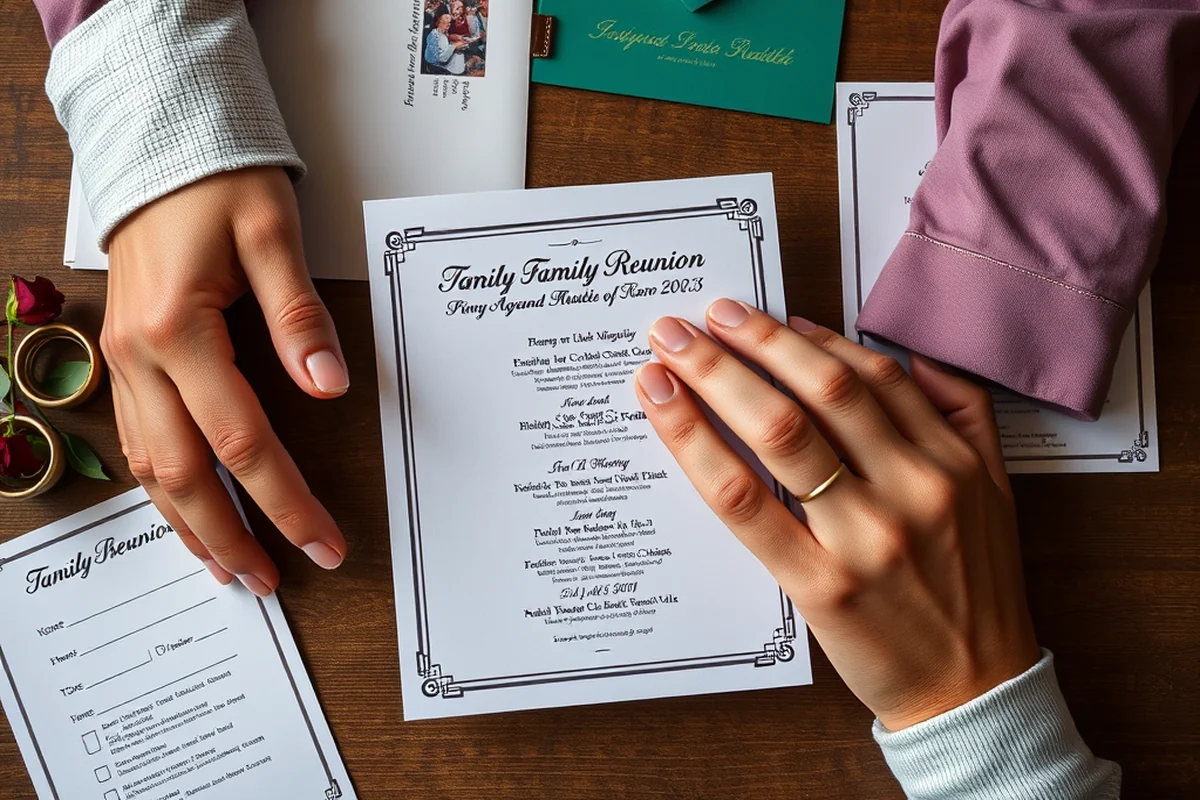
One of the most effective ways to keep a meeting on track is to set clear, specific goals in advance. This could include things like finalizing the budget, selecting a venue, or assigning roles for the event. When everyone knows what the meeting is about, it’s easier to stay focused and avoid unnecessary discussions.
I’ve found that setting a goal like 'finalize the guest list and budget by the end of the meeting' helps keep the discussion focused. It gives the meeting a clear objective and ensures that everything else is handled in the right order.
Setting clear goals also helps in evaluating the success of the meeting afterward. It’s a simple but effective way to measure whether the meeting was productive and whether the key tasks were completed as planned.
Related: The family plan
Assigning Roles: Who Does What?
One of the most common pitfalls I’ve seen is leaving tasks undefined or unassigned. Without clear roles, it’s easy for important tasks to be overlooked or for multiple people to end up trying to do the same thing. Assigning specific roles ensures that everything gets done and that the planning process runs smoothly.
I’ve found that assigning roles like 'budget manager,' 'venue coordinator,' and 'activity planner' works well for most family reunions. It’s important to choose people who are willing and able to take on the task, even if that means stepping outside of their comfort zone.
Assigning roles also helps in creating a sense of accountability. When everyone knows what they’re responsible for, it’s easier to follow through on tasks and to hold each other accountable for meeting deadlines.
Related: How to family reunion planning guide
Creating a Shared Document for the Agenda
One of the most effective ways to keep the planning process organized is by creating a shared document for the agenda. This allows everyone to see the same information, contribute their ideas, and track progress in real time. It’s a simple but powerful tool that helps keep the planning process transparent and collaborative.
I’ve used Google Docs and Notion for this purpose, and both have worked well. The key is to make sure the document is accessible to everyone and that it includes clear sections for each agenda item. This helps keep the discussion focused and ensures that no one misses any important details.
Creating a shared document also helps in creating a sense of ownership and responsibility for the event. It gives everyone a chance to see the progress being made and to contribute their ideas in a structured way.
A shared document is the glue that keeps your family reunion planning on track and everyone in the loop.
Related: Focus on the family
Following Up After the Meeting
One of the most important steps after a planning meeting is to follow up on all action items. This ensures that everyone is held accountable for their tasks and that nothing gets left behind. It’s also a great way to keep the momentum going and to make sure that the planning process continues smoothly.
I’ve found that sending out a follow-up email or message after the meeting is the most effective way to keep everyone on track. This email should include a summary of the meeting, a list of action items, and deadlines for each task. It’s a simple but effective way to keep the planning process moving forward.
Following up after the meeting also helps in creating a sense of continuity. It ensures that everyone knows what’s expected of them and that they’re working toward the same goal. It’s a small step that makes a big difference in the overall success of the event.
💰 Budget-Friendly Version
A low-cost approach focusing on essential elements like a venue and minimal activities, ideal for families with limited funds.
🏠 Small-Space Gathering
Perfect for families with limited space, emphasizing compact venues and streamlined planning processes.
🌳 Outdoor Celebration
A family reunion centered around an outdoor location, with a focus on weather planning and space utilization.
🍷 Grown-Up Version
A more mature and sophisticated approach, with a focus on refined activities and a relaxed, adult-centric environment.
💤 Low-Effort Gathering
Ideal for families that want to keep things simple and stress-free, with minimal planning and a relaxed schedule.
| The mistake | Why it happens | The fix |
|---|---|---|
| Not having a clear agenda for the meeting | This can lead to confusion, wasted time, and missed deadlines. Without an agenda, discussions can easily go off track and important tasks can be overlooked. | Create a detailed, time-blocked agenda in advance and share it with all participants before the meeting. This ensures that everyone knows what to expect and that the meeting stays on track. |
| Leaving out important family members from the planning process | This can lead to a sense of exclusion and missed opportunities for input. It can also make the event feel less inclusive and less engaging for everyone involved. | Invite all family members to the planning meeting, even if it’s through a shared document or a separate channel. This ensures that their input is considered and that they feel included in the process. |
| Not assigning clear roles for the event | This can lead to confusion, duplicated efforts, and missed tasks. Without clear roles, it’s easy for important tasks to be overlooked or for multiple people to try to do the same thing. | Assign specific roles during the planning meeting and make sure that everyone knows what they’re responsible for. This helps ensure that all tasks are completed and that the planning process runs smoothly. |
| Not following up after the meeting | This can lead to missed deadlines, unfinished tasks, and a lack of accountability. It’s easy for important action items to be forgotten if there’s no follow-up after the meeting. | Send out a follow-up email or message after the meeting, summarizing all action items and assigning deadlines. This helps keep everyone on track and ensures that nothing gets forgotten. |
Family Reunion Planning Meeting Agenda Comparison
Common Questions
How long should a family reunion planning meeting be?
How can I ensure that everyone feels included in the planning process?
What if we can’t agree on the budget?
How can I keep the meeting focused and on track?
References
- separated by geographical location and lineage: a case study (digitalcommons.liberty.edu)
- Reunification - child welfare manual - DSS Manuals - MO.gov (dssmanuals.mo.gov)
- Parent and Family Toolbox - Kentucky Department of Education (education.ky.gov)
- Spring Family Reunion - Parents and Families (families.uky.edu)
- PC Alumni, Families, and Friends - Class Reunion (forever-a-friar.providence.edu)
Cite this guide
Family Reunion Planning (2026). Family Reunion Planning Meeting Agenda Comparison: What Works Best. https://planwithjoy.com/family-reunion-planning-meeting-agenda-comparison/
Feel free to cite or share this guide.